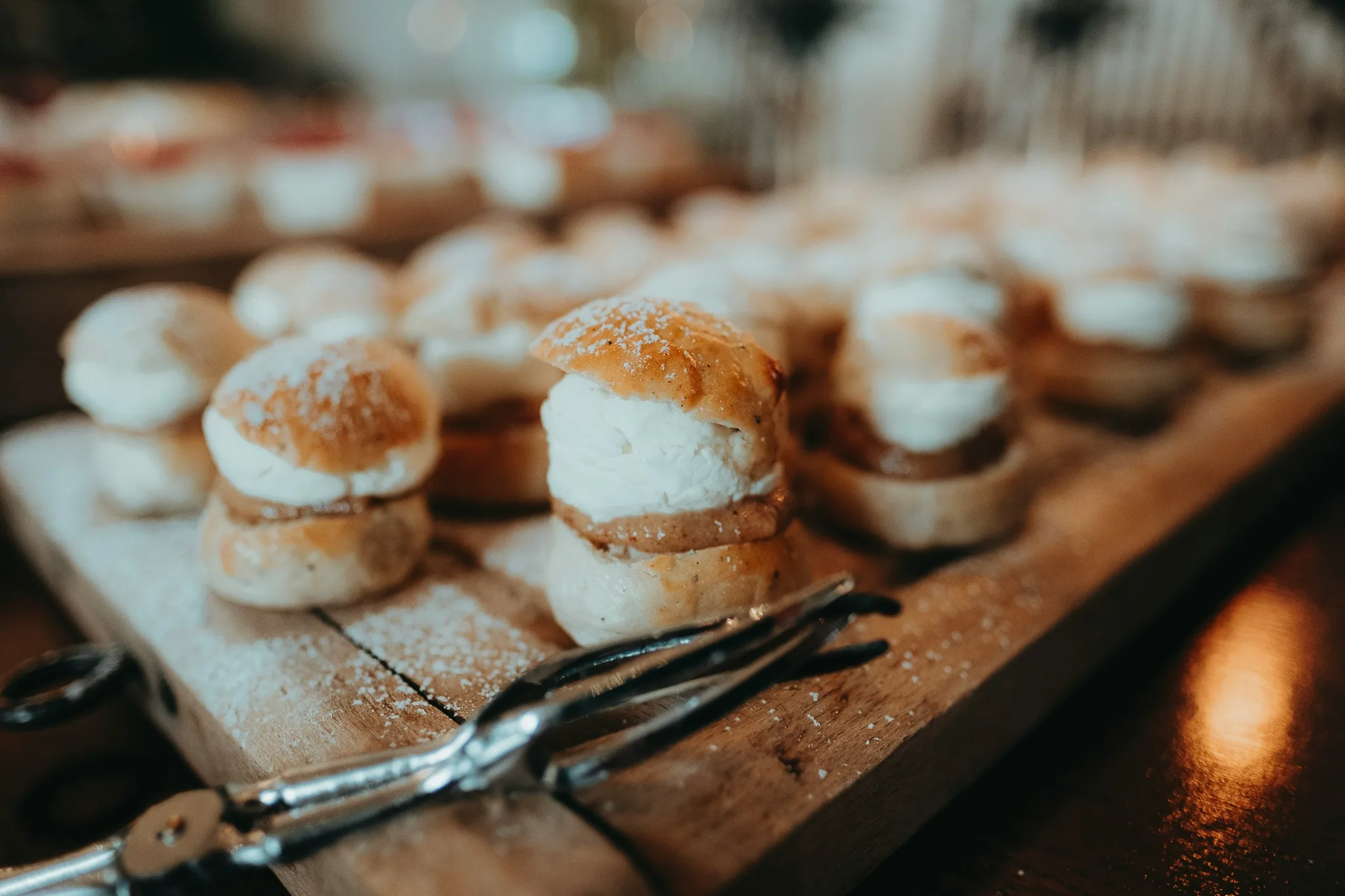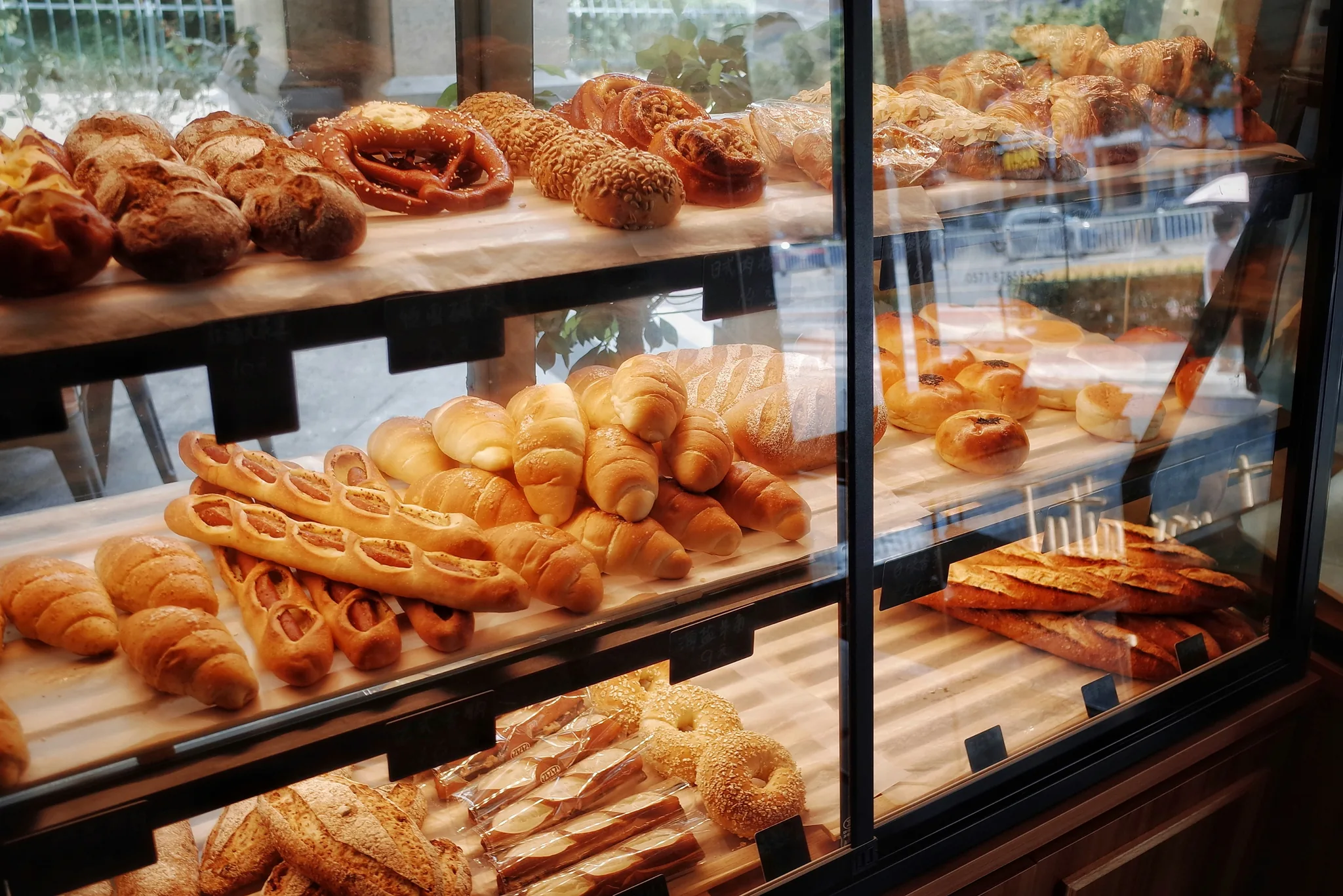
Walk into a bakery and you might find golden, flaky pastries, delicate cream puffs, buttery tarts and beautifully layered Danish pastries.
They may look quite different, but all belong to the fascinating world of pastry.
If you have ever wondered about the different types of pastry, why some are crisp and flaky while others are soft or hollow, or which pastry is best for a particular recipe, this guide explains the essentials.
Understanding pastry is useful whether you enjoy baking at home, want to improve your skills or simply love discovering what goes into your favourite bakery treats.
What Is Pastry?
Pastry is a broad term for doughs and baked products generally made with flour, fat and liquid, sometimes with eggs, sugar or yeast.
The ingredients and preparation method determine the final texture.
Some pastries are designed to be crisp and crumbly. Others rise into delicate layers or form hollow shells that can be filled with cream.
The biggest differences come from three things:
- How fat is incorporated: Mixed directly into flour or folded into distinct layers.
- How the pastry rises: Through steam, yeast, chemical raising agents or a combination.
- How the dough is handled: Mixed briefly, cooked before baking, or repeatedly rolled and folded.
These methods create the wide variety of pastries found in bakeries around the world.
The Main Types of Pastry at a Glance
| Pastry type | Texture | How it rises or forms | Common uses |
|---|---|---|---|
| Puff pastry | Light, crisp and flaky | Steam separates butter-and-dough layers | Savoury puffs, turnovers, pastry shells |
| Choux pastry | Light, airy and hollow | Steam expands the cooked dough | Cream puffs, éclairs, profiteroles |
| Shortcrust pastry | Tender, crisp and crumbly | Usually little or no rise | Tarts, pies, quiches |
| Danish pastry | Flaky, buttery and slightly soft | Yeast plus laminated butter layers | Fruit Danish, custard pastries |
| Croissant dough | Airy, layered and buttery | Yeast plus laminated butter layers | Croissants, pain au chocolat |
| Filo pastry | Very thin, crisp layers | Thin sheets separated by fat | Baklava, savoury parcels |
| Rough puff pastry | Flaky with less regular layers | Steam from roughly distributed butter | Quick turnovers, pies |
1. Puff Pastry: Light, Crisp and Flaky
Puff pastry is one of the best-known types of pastry.
Its defining feature is a series of very thin layers of dough separated by butter or another suitable pastry fat.
To make traditional puff pastry, a sheet of butter is enclosed in dough. The dough is then rolled and folded repeatedly, creating many alternating layers.
When the pastry enters a hot oven, water in the dough and butter turns to steam. The steam pushes the layers apart, producing the characteristic puffed structure.
What makes puff pastry special?
- It develops multiple crisp, flaky layers.
- Traditional puff pastry generally contains no yeast.
- It can be used for both sweet and savoury baking.
- It needs careful temperature control so the butter stays in distinct layers.
Popular puff pastry products
Puff pastry is commonly used for turnovers, pastry twists, savoury parcels, vol-au-vents and a variety of filled bakery snacks.
A well-baked puff pastry should look golden and feel crisp, with clearly visible layers rather than a heavy, doughy centre.
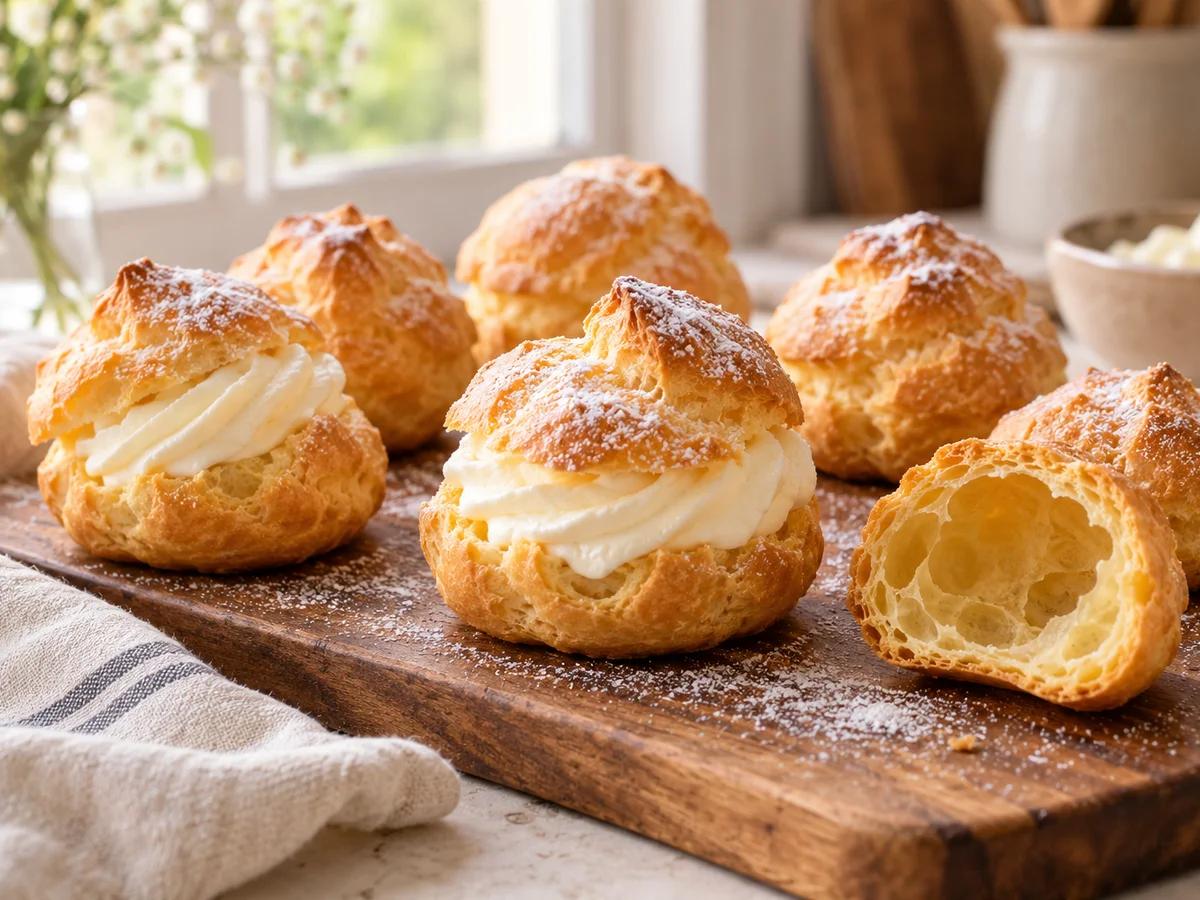
2. Choux Pastry: The Secret Behind Cream Puffs
Choux pastry, also called pâte à choux, is very different from puff pastry.
Instead of rolling butter into layers, you first heat water or milk with butter, then stir in flour to make a thick paste. Eggs are added after the paste cools slightly.
The mixture is piped into shapes and baked.
During baking, moisture turns to steam, expanding the pastry and creating a hollow centre.
What makes choux pastry special?
- The dough is cooked on the stovetop before baking.
- Eggs provide structure and help the pastry expand.
- The finished shells are light and hollow.
- The hollow centres can be filled with sweet or savoury fillings.
Popular choux pastry products
Choux pastry is used for cream puffs, éclairs, profiteroles and savoury gougères.
Unlike laminated pastry, choux does not depend on folded butter layers. Its airy structure comes mainly from steam and the setting of the egg-rich dough.
If you want to try it yourself, follow our choux pastry recipe for light, hollow cream puffs.
3. Shortcrust Pastry: Crisp, Tender and Crumbly
Shortcrust pastry is commonly used for pie and tart bases.
It usually contains flour, butter or another fat, and a relatively small amount of water.
The fat is mixed into the flour before the dough is brought together. This limits gluten development and helps produce a tender, crumbly texture.
What makes shortcrust pastry special?
Shortcrust pastry is designed to hold its shape rather than rise into large layers.
It works particularly well when you need a pastry shell that can support a filling.
Popular shortcrust pastry products
- Fruit tarts
- Custard tarts
- Savoury pies
- Quiches
- Tartlets
Sweet shortcrust pastry often contains sugar and sometimes egg, while savoury versions are usually less sweet or completely unsweetened.
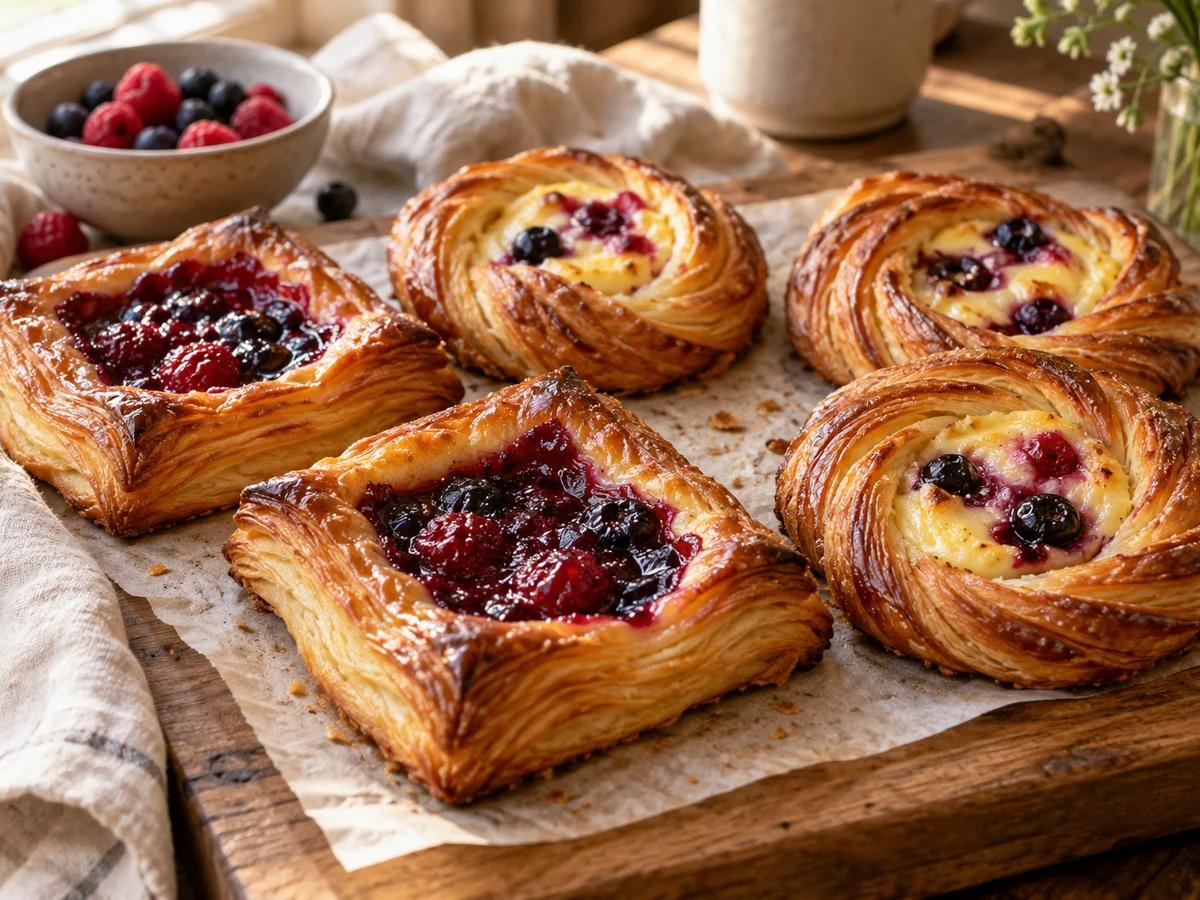
4. Danish Pastry: Buttery Layers with a Soft Centre
Danish pastry is a type of yeasted laminated pastry.
Like puff pastry, it contains layers of dough and butter. However, Danish dough also includes yeast and is often enriched with milk, eggs and sugar.
This gives Danish pastry a texture that is both flaky and slightly soft.
What makes Danish pastry different?
Danish pastry combines two rising methods:
Yeast fermentation: Creates gas bubbles and helps the dough become light.
Steam during baking: Separates the laminated layers and adds flakiness.
The result is a rich pastry that is crisp on the outside and tender inside.
Popular Danish pastry fillings
Danish pastries may be filled with:
- Vanilla custard
- Fruit preserves
- Cream cheese
- Apple filling
- Chocolate
- Cinnamon mixtures
They can be shaped into pinwheels, pockets, twists or open-centred squares.
Making Danish pastry takes patience, especially during the rolling and folding stages, but the process is manageable at home.
Read our complete guide on how to make Danish pastry at home.
5. Croissant Dough: Airy, Buttery and Beautifully Layered
Croissants and Danish pastries share an important technique: lamination.
Both are made by folding butter into a yeasted dough to create multiple layers.
However, croissant dough is generally less sweet and less richly enriched than many Danish pastry doughs.
A well-made croissant has a crisp exterior, a light interior and visible layers throughout.
Danish Pastry vs Croissant: What Is the Difference?
| Feature | Danish pastry | Croissant |
|---|---|---|
| Dough | Usually sweeter and more enriched | Usually less sweet |
| Main texture | Flaky and tender | Flaky and airy |
| Common shape | Squares, pinwheels, twists | Crescent or straight rolls |
| Fillings | Often filled before baking | Often plain or filled |
| Raising method | Yeast and steam | Yeast and steam |
The two are closely related, but their dough formulas, shaping methods and typical fillings create different eating experiences.
6. Filo Pastry: Paper-Thin and Extra Crisp
Filo, also spelled phyllo, is made from extremely thin sheets of dough.
Unlike puff pastry, where layers are created through repeated folding, filo is prepared as individual thin sheets.
These sheets are commonly brushed with butter or oil and stacked before baking.
The result is a delicate, crisp pastry with many thin layers.
Filo is often used for baklava, savoury triangles and layered pies.
Because the sheets dry out quickly, they should be kept covered while you work.
7. Rough Puff Pastry: A Simpler Alternative
Rough puff pastry is a quicker way to achieve a flaky result.
Instead of enclosing a neat butter block inside the dough, pieces of cold butter are mixed into the flour and then rolled and folded.
The butter remains in irregular layers, producing flakiness when baked.
Rough puff does not always rise as evenly as traditional puff pastry, but it is a useful choice for home bakers who want a faster method.
It works well for turnovers, pie toppings and simple savoury pastries.
Puff Pastry vs Choux Pastry: What Is the Difference?
Although their names sound similar, puff pastry and choux pastry use completely different methods.
Puff pastry is a laminated dough. It relies on thin layers of dough and fat that separate during baking.
Choux pastry is a cooked paste enriched with eggs. It expands through steam to form a hollow shell.
Puff pastry is ideal when you want crisp, flaky layers. Choux pastry is ideal when you want a hollow pastry that can be filled after baking.
Which Type of Pastry Should You Use?
Choosing the right pastry depends on the result you want.
| If you want to make… | Choose… |
|---|---|
| A flaky savoury turnover | Puff pastry |
| A cream-filled puff | Choux pastry |
| A fruit tart | Shortcrust pastry |
| A fruit or custard Danish | Danish pastry |
| A classic croissant | Croissant dough |
| A crisp layered dessert | Filo pastry |
| A quick homemade flaky pie topping | Rough puff pastry |
Understanding these differences makes it much easier to choose a suitable recipe and avoid disappointing results.
Common Pastry Mistakes to Avoid
Allowing butter to become too warm
This is especially important for puff pastry, croissants and Danish pastry.
When the butter melts into the dough during rolling, the layers become less distinct.
Work in a cool space and refrigerate the dough whenever it becomes too soft.
Adding too much flour
Excessive flour can make pastry dry, tough or difficult to roll.
Use only as much dusting flour as needed to prevent sticking.
Overworking shortcrust dough
Too much kneading can produce a hard crust instead of a tender one.
Mix just until the dough comes together.
Opening the oven too early when baking choux
Choux pastry needs time to expand and set.
Opening the oven before the shells are stable may cause them to collapse.
Underbaking pastry
Pastry that looks golden outside may still be damp or doughy inside.
Look for the correct colour, structure and texture for the specific pastry you are making.
Pastry and Bakery Traditions in Sri Lanka
In Sri Lanka, bakery culture includes a wide range of sweet and savoury products, from flaky filled pastries to breads, buns and teatime treats.
Savoury pastries are especially popular as convenient snacks, while sweeter varieties are often enjoyed with tea or coffee.
At Mayura Bake House in Gampaha, bakery tradition is an important part of our story. Learning about the different types of pastry is one way to appreciate the skill and techniques behind everyday bakery favourites.
Frequently Asked Questions
1. How many main types of pastry are there?
There is no single universal count. Common categories include puff, choux, shortcrust, Danish, croissant, filo and rough puff, with many regional variations.
2. Is puff pastry the same as Danish pastry?
No. Both use laminated layers, but traditional puff pastry is generally unleavened, while Danish pastry contains yeast and is usually richer and sweeter.
3. Which pastry is easiest for beginners?
Shortcrust pastry and rough puff pastry are often more approachable than traditional laminated doughs.
4. What pastry is used for cream puffs?
Cream puffs are made with choux pastry, which expands in the oven and creates a hollow centre suitable for filling.
5. Why does pastry become flaky?
Flakiness develops when layers of fat and dough remain separate. During baking, steam helps push those layers apart.
Final Thoughts
Pastry is much more than one type of dough.
From the crisp layers of puff pastry to the hollow centre of choux and the rich softness of Danish pastry, each method creates something different.
Once you understand the main types of pastry, you can choose recipes more confidently and appreciate the care involved in creating them.
Continue learning with Mayura Bake House:
Written by Mayura Bake House.
Back to the journal