Have a few overripe bananas sitting in your kitchen? Do not throw them away. They might be exactly what you need to make a delicious homemade banana bread.
This easy banana bread recipe produces a soft, moist loaf with a rich banana flavour and a lightly golden crust. It is simple enough for beginners, requires no stand mixer and makes a lovely breakfast, snack or teatime treat.
If you want to know how to make banana bread that is tender rather than dry or heavy, the most important details are using properly ripe bananas, measuring the flour accurately and avoiding overmixing.
Easy Banana Bread Recipe at a Glance
Baking at home
Moist Banana Bread
A moist, tender loaf made with ripe bananas.
- Preparation
- 15–20 minutes
- Baking
- 55–65 minutes
- Total time
- 1 hour 20 minutes
- Yield
- 1 loaf, approximately 10 slices
- Oven
- 175°C (350°F), or about 165°C fan
Total time excludes cooling. Start checking the loaf after 55 minutes.
Equipment
Two bowls, Fork, Whisk, Spatula, Loaf tin
Loaf tin
23 × 13 cm (9 × 5 inches)
Ingredients for Moist Banana Bread
| Ingredient | Quantity |
|---|---|
| Very ripe bananas, mashed | 300 g (about 3 medium bananas) |
| All-purpose flour | 220 g |
| Brown sugar | 120 g |
| Unsalted butter, melted and cooled slightly | 100 g |
| Large eggs | 2 |
| Baking powder | 1 teaspoon |
| Baking soda | ½ teaspoon |
| Salt | ½ teaspoon |
| Vanilla extract | 1 teaspoon |
| Ground cinnamon | ½ teaspoon, optional |
| Chopped walnuts or cashews | 60 g, optional |
For consistent results, weigh the peeled bananas after mashing. Banana sizes vary considerably, so counting bananas alone is less accurate than using a kitchen scale.
Why Ripe Bananas Matter
The best banana bread starts with bananas that are yellow with plenty of brown spots, or even mostly brown on the outside.
As bananas ripen, some of their starch converts into sugars. This gives ripe bananas a sweeter taste and makes them easier to mash into the batter.
Ripe bananas also contribute moisture, helping create the tender texture people love in banana bread.
What if your bananas are still firm and greenish?
It is better to wait until they ripen naturally. Underripe bananas are less sweet, harder to mash and usually produce a less flavourful loaf.
Avoid using bananas that are mouldy or spoiled.
Step 1: Prepare Your Oven and Loaf Tin
Preheat your oven to 175°C (350°F).
Lightly grease your loaf tin and line the bottom and longer sides with baking paper. Leave a little extra paper above the edges to help lift out the baked loaf.
Position the oven rack near the centre so the banana bread bakes evenly.
Step 2: Mash the Bananas
Peel the ripe bananas and place them in a large mixing bowl.
Mash them with a fork until mostly smooth. A few small lumps are fine and can give the finished loaf a pleasant banana texture.
You should have approximately 300 g of mashed banana.
Step 3: Mix the Wet Ingredients
Add the brown sugar, melted butter, eggs and vanilla extract to the mashed bananas.
Whisk or stir until the ingredients are well combined.
The mixture does not need to be perfectly smooth. What matters is that the eggs and butter are evenly distributed.
Step 4: Combine the Dry Ingredients
In a separate bowl, mix the flour, baking powder, baking soda, salt and optional cinnamon.
Stir briefly so the raising agents are distributed throughout the flour.
This reduces the chance of finding unevenly risen areas in the finished loaf.
Step 5: Make the Banana Bread Batter
Add the dry ingredients to the wet banana mixture.
Use a spatula or wooden spoon to fold everything together gently.
Stop mixing as soon as you can no longer see dry flour.
This is one of the most important steps for making moist banana bread.
Unlike yeast bread, banana bread does not need extensive kneading or gluten development. Overmixing can create a tougher, denser loaf.
If you are adding nuts, fold them in at the end.
Step 6: Pour the Batter into the Tin
Transfer the batter into the prepared loaf tin.
Spread the top gently so it is reasonably level.
For decoration, you can place a thin slice of banana along the top, although this is optional.
Do not overfill the tin. The batter needs room to rise during baking.
Step 7: Bake Until Golden and Set
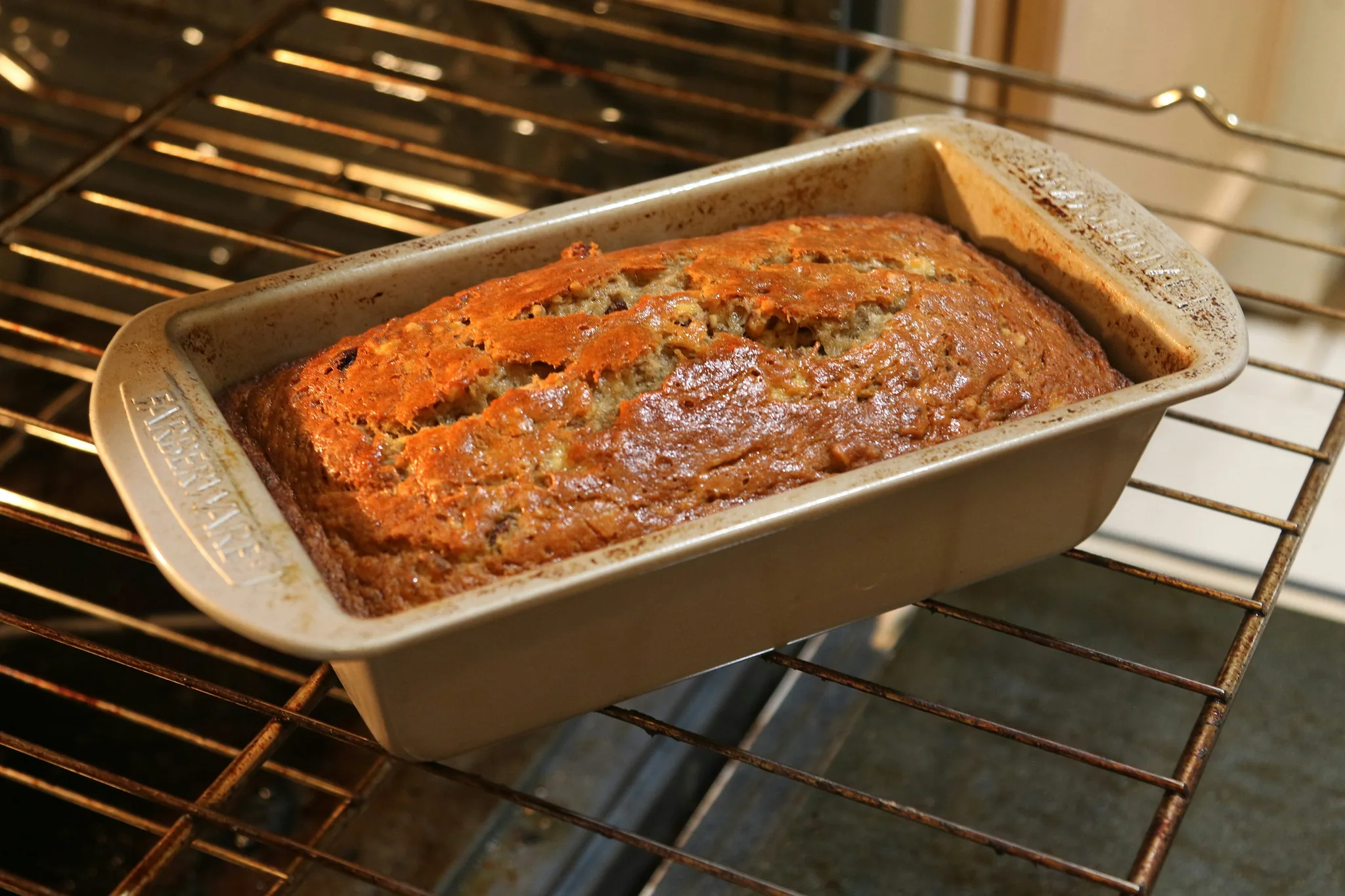
Place the tin in the preheated oven and bake for approximately 55–65 minutes.
The top should become golden brown and develop a gentle crack along the centre.
To check whether it is ready, insert a wooden skewer into the middle of the loaf.
- Wet batter on the skewer means it needs more time.
- A few moist crumbs are fine.
- A mostly clean skewer indicates the centre is baked.
If the top browns too quickly before the middle is cooked, cover it loosely with foil for the final part of baking.
Step 8: Cool Before Slicing
Leave the banana bread in its tin for approximately 15 minutes.
Then carefully lift it out and transfer it to a wire rack.
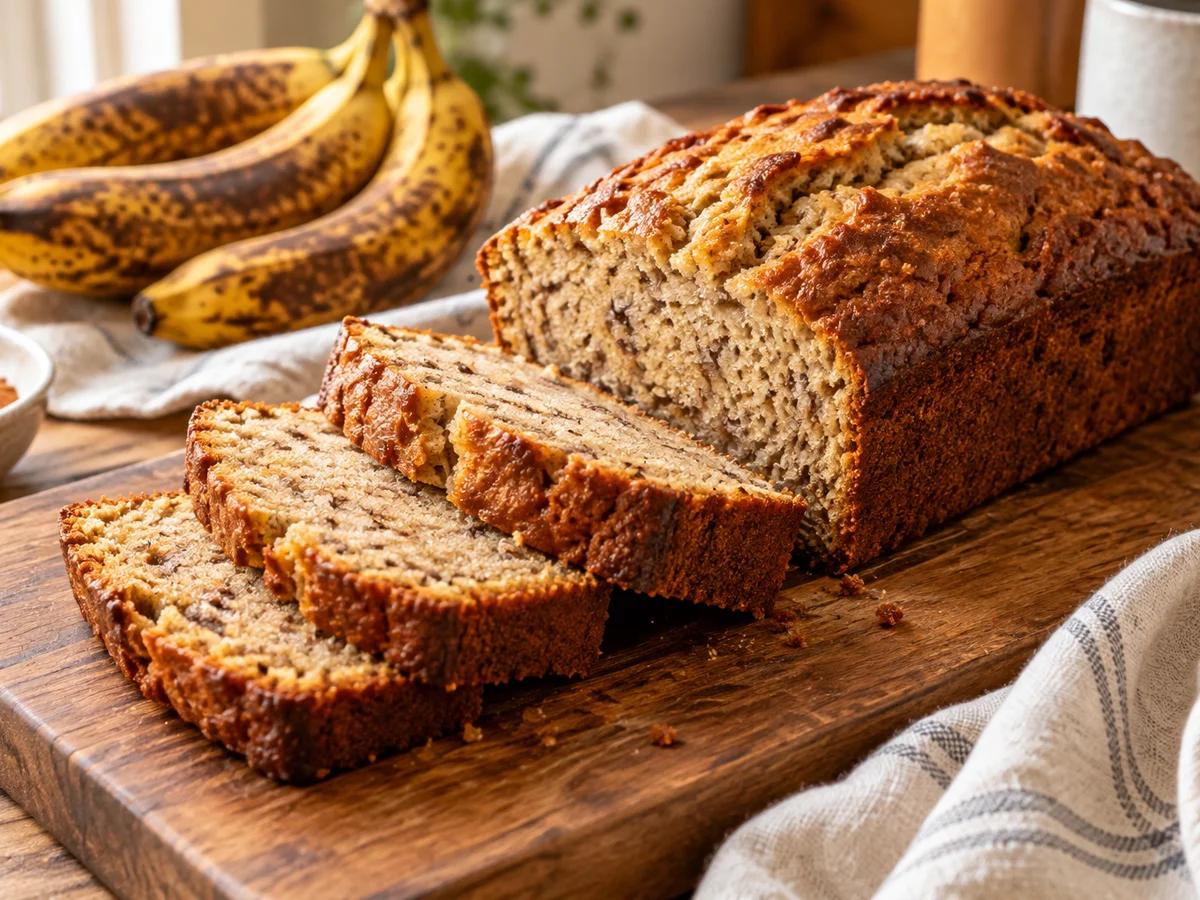
Allow it to cool further before slicing. Cutting too early can make the centre seem sticky or cause the slices to break.
The flavour is lovely when freshly baked, but banana bread can taste even richer once it has rested and the moisture has settled evenly.
How to Make Banana Bread Extra Moist
A good banana bread should be tender and moist, not soggy.
These tips make a noticeable difference.
Use the correct amount of banana
More banana does not always mean better banana bread.
Too much mashed banana can make the centre heavy and difficult to bake fully. Measure approximately 300 g for this recipe.
Measure flour accurately
Scooping flour directly with a cup can accidentally pack in too much.
Using a kitchen scale is the easiest way to avoid a dry loaf.
Do not overmix
Once the flour is added, mix only until combined. A few small lumps are acceptable.
Avoid overbaking
Start checking the loaf near the lower end of the baking-time range.
Different ovens and loaf tins can change how quickly the centre cooks.
Let the loaf cool properly
Cooling helps the structure settle, giving you cleaner slices and a more even crumb.
Easy Banana Bread Variations
Once you are comfortable with the basic recipe, you can try a few simple changes.
Chocolate chip banana bread: Fold in 60–80 g of chocolate chips.
Nutty banana bread: Add chopped walnuts, cashews or another suitable baking nut for extra texture.
Cinnamon banana bread: Add the optional cinnamon for a warmer flavour.
Banana bread with oil: Replace the 100 g of butter with approximately 90 ml of a neutral-flavoured oil. The flavour will be less buttery, but the loaf can remain pleasantly moist.
When adding extras, avoid putting in so much that the batter becomes overloaded.
Common Banana Bread Problems
Why is my banana bread dense?
Overmixing, too much banana or excessive flour can make banana bread heavy.
Measure carefully and fold the batter gently.
Why is my banana bread wet in the middle?
The loaf may be underbaked, the banana quantity may be too high or the oven may be running cooler than expected.
Check the centre with a skewer and continue baking in short intervals if necessary.
Why did my banana bread sink?
Possible causes include too much raising agent, an underbaked centre or opening the oven too early.
Use level measurements and avoid disturbing the loaf during the early stages of baking.
Why is the outside dark but the inside uncooked?
The oven may be too hot or the tin may be conducting heat quickly.
Cover the top loosely with foil and allow the centre to finish baking. An oven thermometer can help check temperature accuracy.
How to Store Banana Bread
Room temperature: Store the completely cooled loaf in an airtight container for approximately 1–2 days if conditions are reasonably cool.
Refrigerator: In hot or humid weather, refrigerate in an airtight container and aim to eat within 4–5 days.
Freezer: Wrap individual slices and freeze for up to 2 months for best quality.
For a freshly baked feel, gently warm a slice before serving.
Always discard bread showing mould or signs of spoilage.
Frequently Asked Questions
1. Can I make banana bread without a mixer?
Yes. A fork, whisk and spatula are enough. In fact, mixing by hand makes it easier to avoid overworking the batter.
2. Can I use frozen bananas?
Yes. Thaw them completely, then mash and measure the banana. Include enough of the thawed banana mixture to reach the recipe's specified weight without adding excess liquid.
3. How ripe should bananas be for banana bread?
Bananas with numerous brown spots and a soft texture are ideal. They usually give better sweetness and flavour than firm, barely ripe bananas.
4. Can I reduce the sugar?
You can reduce the sugar slightly, but it will affect sweetness, moisture retention and browning. Start with a modest reduction rather than removing most of it.
5. Is banana bread actually bread or cake?
Although it is called bread, banana bread is technically a type of quick bread. It rises with chemical raising agents such as baking powder or baking soda instead of yeast, and its mixing method is closer to cake making.
Final Thoughts
Making banana bread at home is a wonderful way to turn ripe fruit into something comforting and delicious.
You do not need complicated techniques. Use ripe bananas, measure your ingredients, mix gently and bake until the centre is cooked.
Whether you enjoy a slice with tea, coffee or as an afternoon snack, this easy banana bread recipe is one worth keeping.
For more practical baking guides from Mayura Bake House, explore our soft homemade bread recipe or learn about the different types of pastry.
Written by Mayura Bake House.
Back to the journal